
An omnichannel rollout plan that keeps ownership clear
Introduce connected voice, WhatsApp, SMS and email workflows without creating duplicate cases or abandoned conversations.
Read the guide
Build an issue-based first-contact-resolution measure with mature observation windows and cross-channel identity rules.
First-contact resolution needs an issue definition, an eligible initial-contact cohort and a repeat-contact observation window. Decide what counts as the same unresolved issue across channels, then wait for the full window before finalising results. Closing a ticket or avoiding a second phone call does not by itself prove resolution.
Part of our guide: Contact center software
Decide whether the measure applies to a case, order problem, service request or another identifiable issue. A person may raise two unrelated issues on one day, while several messages may belong to one issue. State what qualifies as the initial contact and what resolution means. Keep agent-reported closure distinct from verified completion. A stable case identity is essential if you want to connect later phone, messaging and email activity.
Select a period suited to the service process and explain it. A long technical repair cycle may need a different view from a simple information request. This is a local measurement choice, not a universal benchmark. Contacts near the report end may not yet have a complete repeat window. Mark them provisional or use a mature cohort. Otherwise the latest period can appear artificially successful simply because customers have not had time to return.
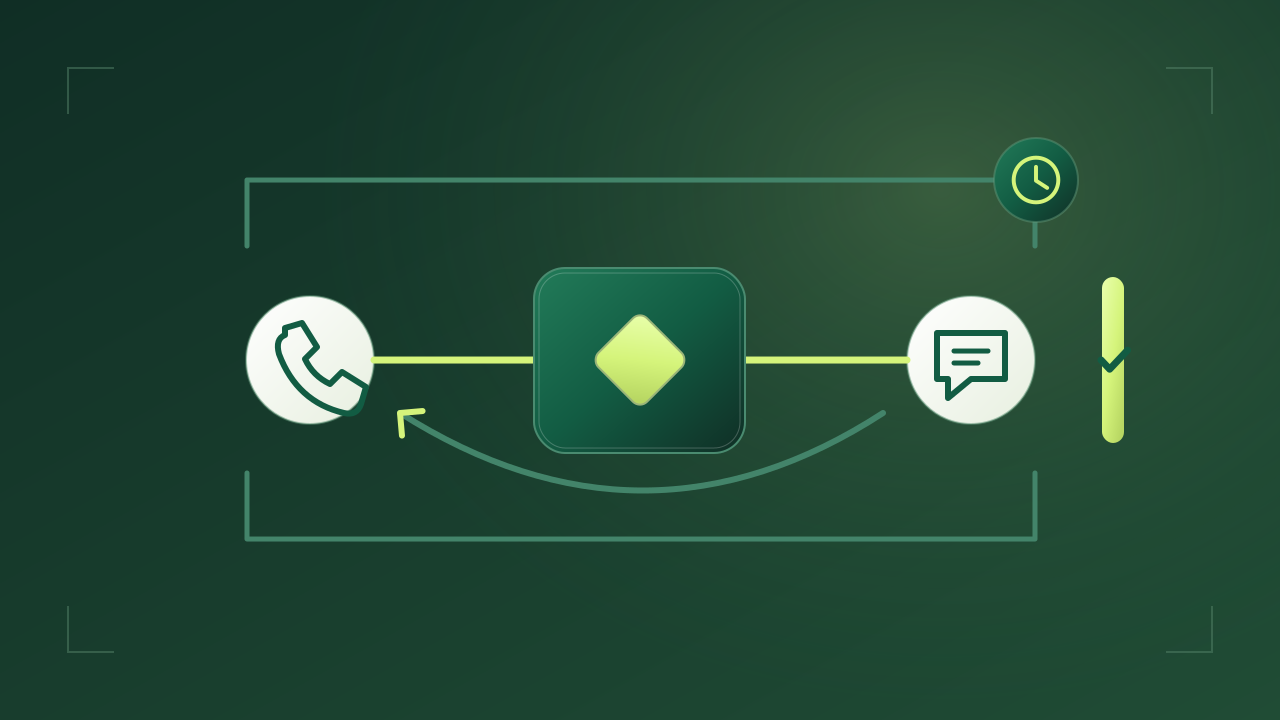
Measure issues rather than isolated channel events.
In an illustrative cohort of 100 eligible initial issues with completed observation windows, 80 were initially marked resolved. Ten of those returned within the defined window for the same unresolved issue. Under a rule requiring initial resolution without such a repeat, the count is 70 and the rate 70%. These are fixture values, not observed results. State how planned follow-ups, reopened errors and unrelated new requests are classified before applying this arithmetic.
Match repeat activity to the issue using the approved CRM and identity process. A phone-number match can be useful but may combine different people or different problems. A customer who switches from a call to email may still be pursuing the same unresolved issue. Inspect ambiguous cases and provide a correction route. Do not interpret silence as proof of success; some customers abandon the process or use an unobserved channel.
Create fixtures for a repeat just inside the window, one just outside, an unrelated issue and a planned multi-step service. Check how a mistaken closure or corrected identity changes the cohort. Keep denominator changes reproducible. If a transfer during one interaction counts as a failure under your definition, make that rule explicit; another operation may define it differently. The test should reveal rule effects rather than force an attractive number.
Review repeat reasons, unresolved work, feedback and sampled outcomes with the headline rate. A shorter observation window can raise FCR without changing service. DialerBee’s connected history and reporting are useful starting points, but demonstrate the case linkage and metric definition your operation needs. Keep comparisons conditional on matching scope. Use the result to identify a solvable failure pattern, not to pressure agents into premature closure or discourage customers from returning.
Check whether a reopened case receives a new identifier in a connected system. If so, a same-case query may miss the repeat even though the customer is pursuing the original issue. Reconcile those identity changes before interpreting a rise in apparent first-contact resolution.
No. The customer may switch channels, abandon the issue or return outside the chosen window.
No. Choose a justified period for the service process and disclose its effect on eligibility and interpretation.
Prepared by the ContactCenter.me editorial team, a BroadNet resource powered by DialerBee. Product statements reflect the linked documentation checked 2026-11-25. Operational examples are planning guidance. Read our editorial standards and commercial disclosure.
Measure how many eligible cases were resolved without a repeat contact.
Calculate customer satisfaction from positive responses and total valid survey responses.
Calculate your blended contact cost and see what a change in volume would mean.

Introduce connected voice, WhatsApp, SMS and email workflows without creating duplicate cases or abandoned conversations.
Read the guide
Definitions and formulas for the twelve contact center KPIs teams use most, what each one hides, and which metrics to read together.
Read the guide
Design clear call-quality criteria, weighted scoring, critical-failure rules, reviewer calibration and useful agent coaching.
Read the guideExplore your requirements with a DialerBee specialist. Bring your workflows, your carrier, and your questions.