
Skills-based routing: define eligibility before priority
Separate required capabilities from preferences, then test waiting, fallback and agent-state changes with realistic cases.
Read the guide
Design overflow triggers, skills, announcements and ownership so busy queues still give callers a clear next step.
Queue overflow needs an explicit trigger, a capable destination and a defined customer outcome. Moving a call to another queue does not create staffing capacity. Test eligibility, context, repeated routing and no-agent cases, then measure the entire journey rather than celebrating a shorter wait in the original queue.
Part of our guide: Contact center software
Decide whether overflow responds to waiting time, queue depth, unavailable agents or a deliberate operational change. Explain why the trigger is useful and who may alter it. A queue-length number alone does not describe expected delay when handling times vary. Confirm which triggers the platform actually supports. If your intended rule needs manual intervention or custom work, record that scope instead of presenting it as a native feature.
List the knowledge, permissions, languages and systems required by overflow agents. A free person who cannot complete the enquiry may create another transfer and more effort. Decide which intents may overflow and which must remain with a specialist or an approved callback route. Agree whether the original team retains responsibility for unresolved work. Shared visibility is not the same as accepted ownership when the caller changes teams.
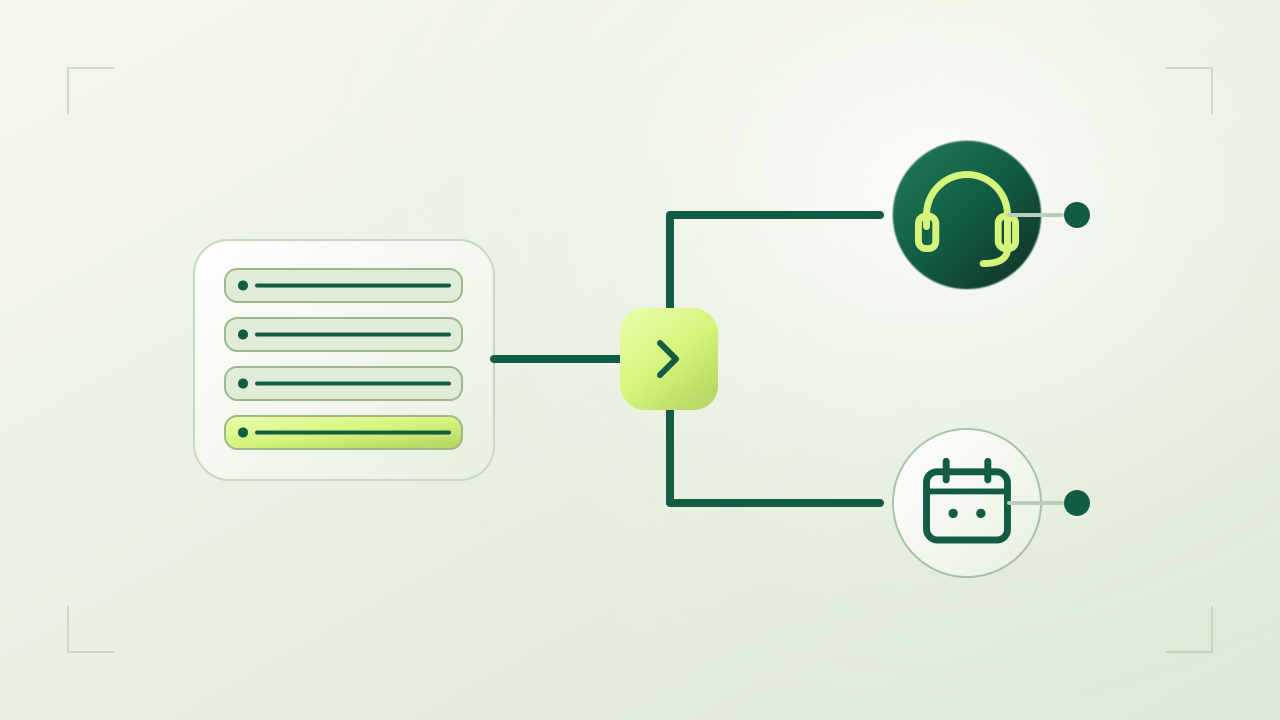
Overflow needs an eligible and capable destination.
An illustrative repairs queue becomes busy while general support has spare availability. Permit overflow only for status enquiries that general support is trained and authorised to handle. Keep complex fault diagnosis with the specialist process. Test one case of each. The desired outcome is the correct resolution or owned next action. A general-support answer that immediately returns the customer to the same repairs queue is not a useful overflow success.
Tell callers what is happening using language that matches the actual service. Avoid promising a specialist when the next team provides only triage. Prevent routes from bouncing between queues indefinitely, and define what happens after an unanswered overflow attempt. Test whether waiting time, caller context and previous menu choices remain available. A caller should not be asked to repeat avoidable steps simply because the organisation moved the call internally.
Test overflow when the backup team is closed, its agents change state, the destination fails and a caller disconnects during transfer. Inspect the recording and report to see whether the outcome is recognisable. Use authorised sample calls and agreed failure conditions. Confirm where an unfinished request appears after the transfer. A green connection event without a receiving agent and a customer next step does not complete the acceptance test.
Compare total customer wait, transfers, repeat contacts and actual resolution for overflowed enquiries. Do not move the reporting boundary to the second queue and call the first queue improved. DialerBee describes per-queue routing and waiting controls; demonstrate the precise overflow design you need. Revisit the staffing plan if overflow is routinely necessary. An emergency route can become a permanent hidden workload if no owner reviews its causes and impact.
Check whether the overflow destination has different recording or data-access settings. A route that is operationally convenient may change who hears the call or sees its context. Resolve those boundaries with the responsible owners before enabling the route, and include them in the acceptance record.
It can redistribute suitable work, but it does not create capacity or specialist expertise.
No. Match the route to required skills, permissions and a clear fallback when a suitable person is unavailable.
Prepared by the ContactCenter.me editorial team, a BroadNet resource powered by DialerBee. Product statements reflect the linked documentation checked 2026-11-25. Operational examples are planning guidance. Read our editorial standards and commercial disclosure.
Estimate the agents needed to meet a queue service-level target, with occupancy and shrinkage included.
Turn expected daily workload, productive hours and shrinkage into a simple staffing baseline.
Calculate your service level with an explicit short-abandon exclusion policy.

Separate required capabilities from preferences, then test waiting, fallback and agent-state changes with realistic cases.
Read the guide
Understand how call arrivals, handle time, queueing assumptions and shrinkage turn into an interval staffing plan.
Read the guide
Separate queue abandonment, closed-hours calls and technical failures, then assign an appropriate recovery action.
Read the guideExplore your requirements with a DialerBee specialist. Bring your workflows, your carrier, and your questions.