
Inbound staffing explained: workload, Erlang C and shrinkage
Understand how call arrivals, handle time, queueing assumptions and shrinkage turn into an interval staffing plan.
Read the guide
Separate elapsed customer waiting from agent effort, then balance new arrivals, backlog and promised response times.
Asynchronous workload should be planned from active handling effort, new arrivals, backlog and due commitments. An email thread open for two days is not two days of labour. Conversely, several simultaneous message threads do not mean one agent can complete unlimited work without attention or context-switching cost.
Part of our guide: Contact center software
Decide whether the unit is a message, a conversation or an issue. Multiple customer messages can belong to one unresolved task, while one thread may contain several distinct issues. Record arrival, agent touch, waiting-for-customer and completion states separately where possible. Elapsed resolution time describes the customer’s journey; active work time describes effort. Both matter, but substituting one for the other produces an unreliable capacity model.
At the start of each planning interval, identify new expected work and open work whose next action is due. A quiet arrival period can still need capacity to clear yesterday’s backlog. Prioritise according to the approved service promises and task importance, with a visible owner. Do not close old conversations merely to make queue age look better. A state change should reflect a real resolution or the defined waiting condition.
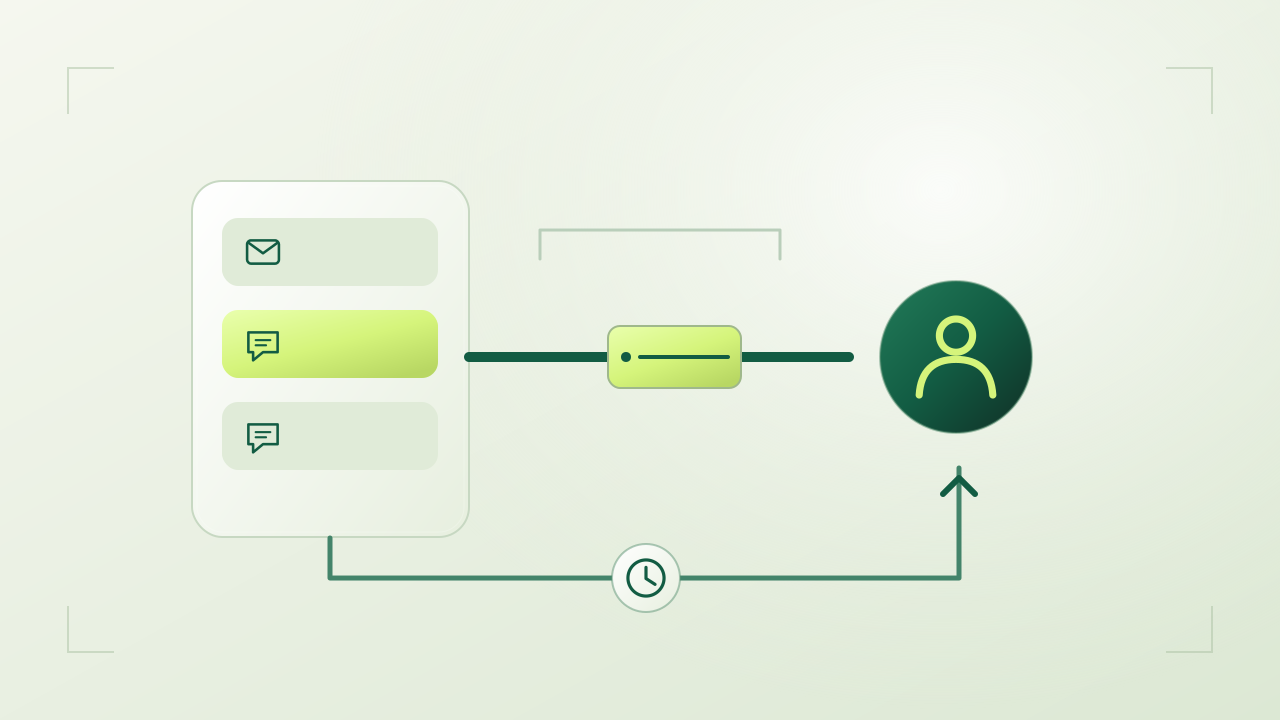
Separate elapsed waiting from active agent effort.
In a fictional planning hour, five email tasks need six minutes of active work each and ten messaging tasks need two minutes each. The illustrative effort subtotal is 50 minutes, before the chosen allowances and competing duties. It is not a complete one-agent schedule. If several threads remain open while customers respond, do not multiply those elapsed waiting periods into labour or divide the active effort by an assumed concurrency number.
Define when an agent may handle calls while assigned messages, and what happens when a customer replies during a call. Some tasks need uninterrupted concentration or particular permissions. Test the supported agent-state and assignment behaviour instead of assuming a shared inbox automatically balances attention. Keep a backup owner for urgent or overdue work. A customer should not receive two replies simply because separate channels showed the task to different available agents.
Use fixtures for a customer replying after closure, sending several messages rapidly, changing contact identity and returning after a shift ends. Simulate a failed outbound message and delayed CRM update. Confirm that the next-action clock, owner and duplicate handling remain accurate. A sent indicator should not be treated as delivery or resolution. Review channel-service requirements with the responsible owner without assuming platform connectivity determines which messages may be sent.
Inspect active effort, backlog age, overdue actions, repeated contacts and quality together. A shorter first response may simply defer the real work into another message. DialerBee describes connected voice, WhatsApp, SMS and email threads; test your assignment and state model in a demonstration. Adjust staffing from representative observations and keep any tool estimates labelled. An asynchronous plan needs both service priorities and capacity, rather than a universal chats-per-agent claim.
Include a task that waits for another internal team rather than the customer. Its ownership, follow-up due time and elapsed-resolution clock may differ. A single waiting state can conceal this dependency and leave an enquiry idle even when the customer has already supplied everything needed.
Not without separating actual agent work from customer or system waiting.
It can use waiting periods, but active work and attention still have limits. Measure the actual workflow instead of assuming a universal multiplier.
Prepared by the ContactCenter.me editorial team, a BroadNet resource powered by DialerBee. Product statements reflect the linked documentation checked 2026-11-25. Operational examples are planning guidance. Read our editorial standards and commercial disclosure.
Combine talk, hold and after-call work to measure average handling time.
Measure the share of available queue time spent handling customer work.
Turn expected daily workload, productive hours and shrinkage into a simple staffing baseline.

Understand how call arrivals, handle time, queueing assumptions and shrinkage turn into an interval staffing plan.
Read the guide
Design overflow triggers, skills, announcements and ownership so busy queues still give callers a clear next step.
Read the guide
Build a usable offered-contact series with consistent clocks, event definitions, anomalies and a separate handling-time model.
Read the guideExplore your requirements with a DialerBee specialist. Bring your workflows, your carrier, and your questions.