
Call center scripts with the compliance lines built in
Copy-ready call center script templates for support, sales, collections, voicemail, AI agents and transfers, with each required US line labeled by rule.
Read the guide
How to keep outbound calls inside 8 a.m.–9 p.m. at the called person's location: area codes, mobile numbers, split-zone states and daylight saving.
US federal rules allow telephone solicitations only between 8 a.m. and 9 p.m. local time at the called person's location, not the caller's. The FCC rule is 47 CFR 64.1200(c)(1) and the FTC rule is 16 CFR 310.4(c). Because area codes do not prove where a person is, schedule each record by its best known time zone and, when signals conflict, call only in hours that are valid in every possible zone.
Part of our guide: Contact center software
The FCC rule, 47 CFR 64.1200(c)(1), bars telephone solicitations to residential subscribers before 8 a.m. or after 9 p.m. local time at the called party's location. Under 47 CFR 64.1200(e), this also applies to wireless numbers to the extent the FCC described in its 2003 order. The FCC definition of telephone solicitation excludes calls made with prior express invitation or permission, calls to people with an established business relationship, and calls by or for tax-exempt nonprofits.
The FTC rule, 16 CFR 310.4(c), says that without the person's prior consent, a telemarketer may not make outbound calls to a person's residence outside 8:00 a.m. to 9:00 p.m. local time at the called person's location. For debt collection, Regulation F, 12 CFR 1006.6(b)(1)(i), treats calls before 8:00 a.m. and after 9:00 p.m. at the consumer's location as inconvenient unless the collector knows otherwise.
This is general information about US federal rules as of November 2026, not legal advice; confirm your obligations with counsel. State laws can add stricter hours, days or holiday rules.
The rule follows the person, not the number. Many people keep a mobile number after moving to another state, and numbers can be ported between carriers and services. An area code tells you where a number was first assigned. It does not tell you where the person is today.
Use every location signal you have: the area code, the mailing or billing address, the ZIP code and any location the customer has given you. When signals agree, use that zone. When they conflict, take the latest start time and the earliest end time across all of them.
Regulation F's official interpretation, comment 6(b)(1)(i)-2, describes this approach for debt collectors. Its example is a mobile number with an Eastern area code and a home address in the Pacific zone. The convenient window is after 11:00 a.m. Eastern (8:00 a.m. Pacific) and before 9:00 p.m. Eastern (6:00 p.m. Pacific). For telemarketing, the same intersection method is a careful practice rather than a written rule.
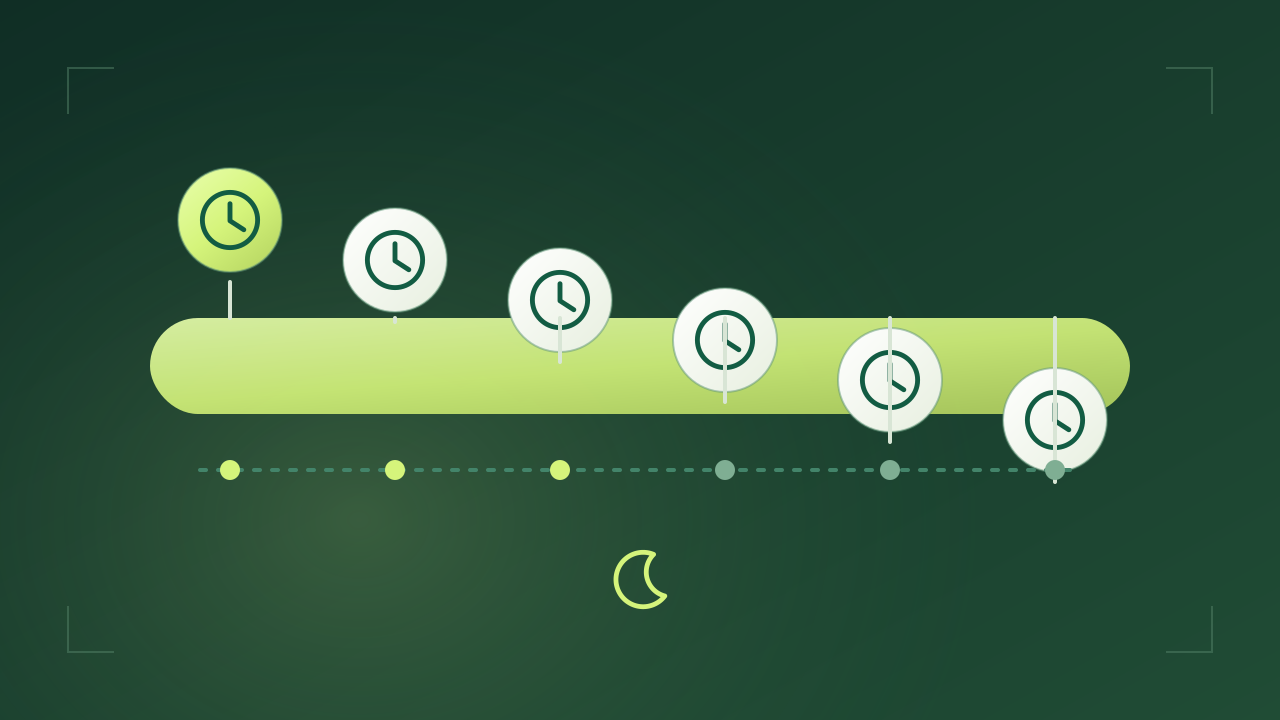
Federal calling hours are 8 a.m. to 9 p.m. at the called person's location, not the caller's.
Some states cross a time zone boundary, so the state alone does not set the window. The boundaries below come from the US Department of Transportation's time zone rules in 49 CFR Part 71. Map these records by county or ZIP code, or use the narrower window that is valid in both zones.
In the US, daylight saving time starts at 2:00 a.m. on the second Sunday in March and ends at 2:00 a.m. on the first Sunday in November. In 2027 that is March 14 and November 7. Hawaii, most of Arizona, Puerto Rico and the other territories do not observe it. The Navajo Nation in Arizona does.
This means Arizona has the same clock time as Mountain zones in winter and as Pacific zones in summer. A dialer that stores fixed UTC offsets will be wrong for part of the year. Store a named time zone for each record, such as America/Phoenix or America/Chicago, and let the system apply the rules for each date.
Several states set their own calling hours. We list only the two we checked in the statute text in November 2026. Check every state on your list in its current statute before you launch.
Florida, Fla. Stat. 501.616(6)(a): a commercial telephone seller or salesperson may not make a commercial telephone solicitation call before 8 a.m. or after 8 p.m. local time in the called person's time zone. The statute defines who is covered and has exemptions.
Washington, RCW 80.36.390(8): a telephone solicitor may not place calls that will be received before 8:00 a.m. or after 8:00 p.m. at the recipient's local time.
Treat the calling window as data on each record, not as a setting on the campaign. These steps work with most dialers.
Example. A center in New York runs a sales campaign on Tuesday, December 1, 2026, when daylight saving time is not in effect. The center is staffed from 8:00 a.m. to 9:00 p.m. Eastern. Each queue can dial from the later of 8:00 a.m. local time and the center's opening, until the earlier of 9:00 p.m. local time and the center's closing. All times below are Eastern.
State overlays change some rows. Florida's 8 p.m. limit ends calls to Eastern Florida at 8:00 p.m. Eastern, and calls to the Central Panhandle at 9:00 p.m. Eastern (8:00 p.m. Central). Washington's 8 p.m. limit is 11:00 p.m. Eastern, so the center's own closing time ends those calls first.
On Tuesday, March 16, 2027, daylight saving time is in effect. Arizona then starts at 11:00 a.m. Eastern, like the Pacific zone, and Hawaii starts at 2:00 p.m. Eastern. A record with an Eastern area code and a Pacific address gets 11:00 a.m. to 9:00 p.m. Eastern in December.
The customer's. Both 47 CFR 64.1200(c)(1) and 16 CFR 310.4(c) use local time at the called person's location. A center in New York calling California must wait until 11 a.m. Eastern in winter, which is 8 a.m. Pacific.
Treat both as possible locations and call only during hours that are valid in both. Regulation F's commentary uses this method for debt collectors, and it is a careful approach for telemarketing too.
The FCC definition of telephone solicitation excludes calls made with prior express invitation or permission, and the FTC rule allows calls outside the window with the person's prior consent. Keep records of that consent and of any time the customer asked for.
The federal rules set hours, not days, so the 8 a.m. to 9 p.m. window applies every day. Some state laws restrict Sundays or holidays, so check each state's statute for your list.
Several do. We verified two in the statute text: Florida (501.616(6)(a)) and Washington (RCW 80.36.390(8)) both end telephone solicitation calls at 8 p.m. local time. Check other states' statutes directly.
Prepared by the ContactCenter.me editorial team, a BroadNet resource powered by DialerBee. Product statements reflect the linked documentation checked 2026-11-25. Operational examples are planning guidance. Read our editorial standards and commercial disclosure.
Check which US time zones are inside the federal 8 a.m. to 9 p.m. calling window for your campaign hours.
Estimate attempt volume, connected workload and daily agent requirements.
Estimate the annual FTC National Do Not Call Registry access fee for the number of area codes you call.
Copy-ready call center script templates for support, sales, collections, voicemail, AI agents and transfers, with each required US line labeled by rule.
Read the guide
Build an outbound operating process with approved contact sources, suppression, time-zone handling, caller ID, retry limits and reviewable evidence.
Read the guide
Compare outbound dialing modes by preparation needs, agent readiness, list quality, customer experience and campaign controls.
Read the guideExplore your requirements with a DialerBee specialist. Bring your workflows, your carrier, and your questions.