
Create a BPO client acceptance pack before the first live shift
Agree service definitions, client access, evidence, exception ownership and a bounded first-shift decision.
Read the guide
Connect recording purpose, access, expiry, approved holds and exports in one operational lifecycle.
Recording retention is a lifecycle decision: why the recording exists, who may access it, when it expires and what an approved exception changes. Set the policy with responsible owners, then test storage, playback, deletion and exported copies. A retention setting alone does not govern every copy of a conversation.
Part of our guide: Contact center software
List the approved uses for recordings, such as quality review, resolving a disputed conversation or supporting an agreed investigation. Have the relevant business and policy owners determine the schedule for each use. This is an operational design exercise, not a statement of a universal legal period. Identify who can change retention, approve an exception and confirm expiry. Avoid copying a long default simply because storage appears inexpensive.
Audio may have a transcript, summary, QA score, downloaded export and a CRM reference. Map where these live and which lifecycle applies. Deleting an audio object does not necessarily remove a transcript, and a signed playback link does not recall a file someone downloaded. Include backups and any restoration process in the review. The aim is a documented scope of what expiry does, rather than an unqualified promise that every copy disappears immediately.
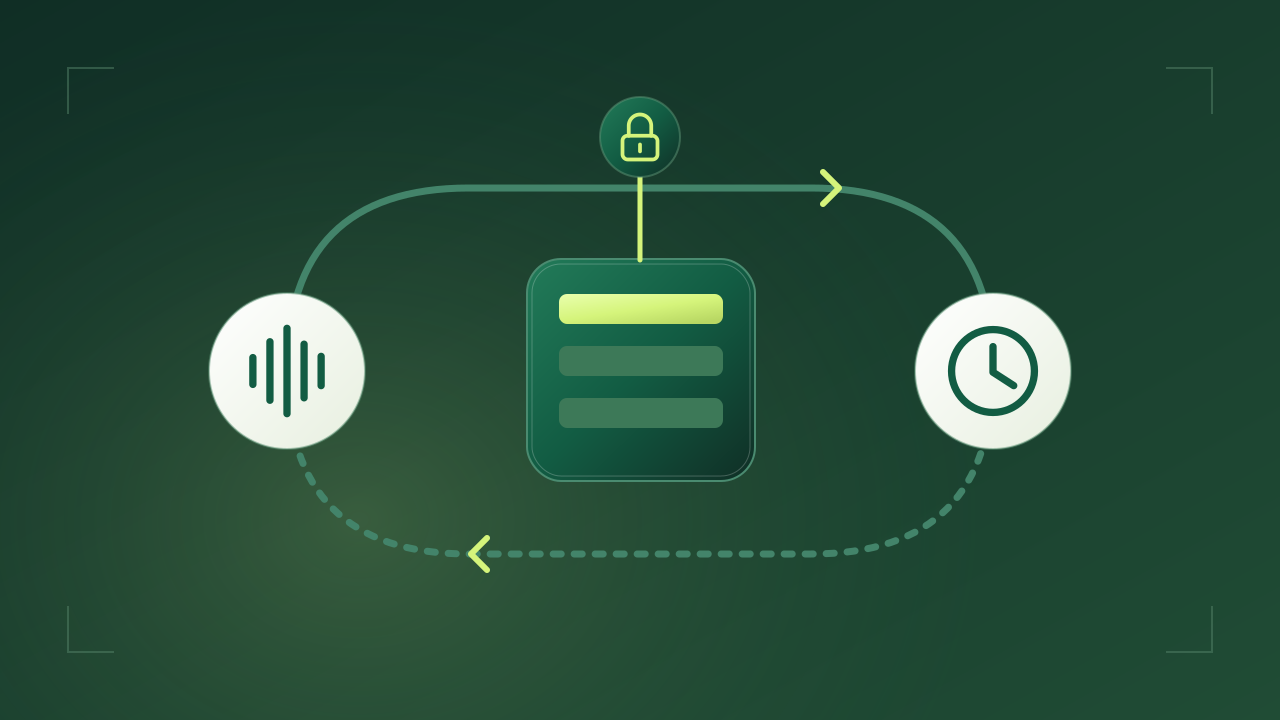
Govern related copies as well as audio.
A fictional service team keeps ordinary review recordings under its approved schedule but needs one conversation preserved for an authorised investigation. Record the case reference, approver, reason, scope and review date. Test the exception using a sample recording. Check that unrelated calls still expire normally. The case owner should know how the exception is released; otherwise a temporary decision can become an indefinite collection without further review.
Use authorised sample accounts to check playback, search and download permissions. Verify how a temporary playback link behaves after expiry and whether exports have an accountable recipient. Document who may create a bulk package and how its contents are reconciled. DialerBee describes signed playback, configurable retention and hold controls. Demonstrate the exact deployment and plan rather than assuming those words establish your complete data-handling policy.
Create a non-customer fixture with a short test lifecycle and observe what disappears from search, storage and permitted playback. Inspect references left in other systems. Have the technical owner explain how backups and restores interact with expired or held records. Do not deliberately shorten production retention to test this. A failure may be a stale index, an undeleted object or a policy mismatch; those require different corrective actions and evidence.
Monitor storage use, export activity, overdue exception reviews and failed expiry jobs where the platform exposes them. Reconcile changes when a new channel, transcription service or client is added. DialerBee’s published plan matrix includes differing recording-retention allowances, so commercial scope and approved policy must be considered together. Keep the actual agreement current and avoid implying that a parent organisation’s certification independently proves every recording workflow or deployment.
Include a fixture whose recording was exported before expiry. Ask the recipient owner to demonstrate the approved treatment of that copy and its manifest. This exposes the boundary between platform deletion and human or external-system handling without pretending one setting controls every downstream file.
No. It restricts a playback link for a period; retention controls the underlying recording lifecycle and related copies.
Use the schedule approved for the relevant purposes and obligations. The operational design should make exceptions and ownership explicit.
Prepared by the ContactCenter.me editorial team, a BroadNet resource powered by DialerBee. Product statements reflect the linked documentation checked 2026-11-25. Operational examples are planning guidance. Read our editorial standards and commercial disclosure.
Create a practical requirements brief for your contact center software evaluation.
Track the practical work needed before moving queues, numbers, agents and workflows.
Build a weighted quality scorecard and export a reusable review template.

Agree service definitions, client access, evidence, exception ownership and a bounded first-shift decision.
Read the guide
A practical Arabic voice-agent acceptance test covering dialects, mixed-language details, interruption, accurate answers and human handoff.
Read the guide
Build an outbound operating process with approved contact sources, suppression, time-zone handling, caller ID, retry limits and reviewable evidence.
Read the guideExplore your requirements with a DialerBee specialist. Bring your workflows, your carrier, and your questions.