
A practical BYOC migration plan for your contact center
Move to a new contact-center platform while retaining your SIP carrier, with test calls, staged routing, ownership and a documented rollback.
Read the guide
A practical SIP acceptance sheet covering signalling, media, routing and reproducible failure evidence.
A SIP acceptance matrix records an expected business outcome for each call path, then links the result to technical evidence. Test signalling, audio, digits, transfers and final records separately. A successful connection is only one row of the matrix, not proof that the whole service is ready.
Part of our guide: What is CCaaS?
SIP describes session signalling; it is not the audio itself. Distinguish the invitation and answer sequence, negotiated media, application routing and final business record. A call can be accepted while audio travels in only one direction, or sound correct while reaching the wrong queue. Assign an owner to each layer so a symptom is investigated by the appropriate team rather than passed indefinitely between carrier and application support.
Record a test identifier, authorised originating number, destination number, expected route, date and time zone, device and carrier. Attach the platform call reference and any approved diagnostic trace. Write the expected result before placing the call. Avoid vague passes such as works well. Use observable criteria: both parties heard speech, digits reached the intended menu branch, the receiving agent answered, and the recorded outcome matched the journey.
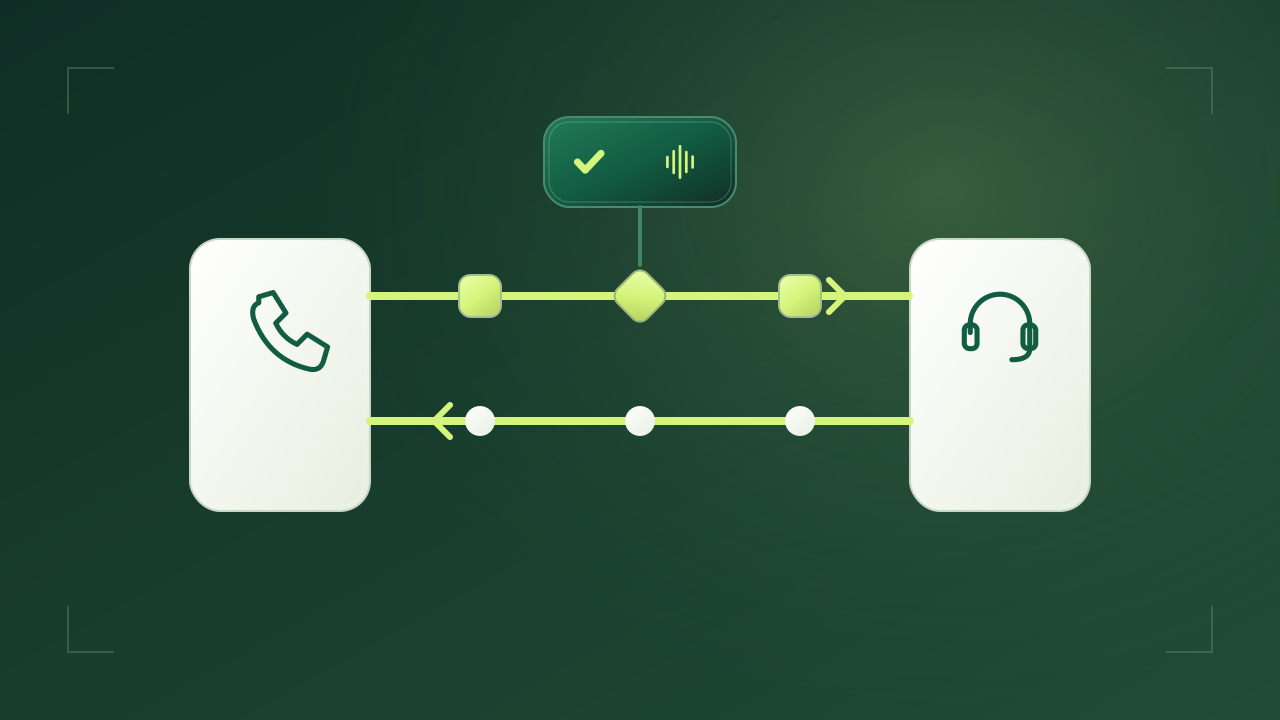
Separate signalling from usable audio and business completion.
Include hold and resume, blind or attended transfer where supported, conference and caller hang-up. Test that each party is released correctly and that media remains usable after a change. Repeat relevant cases through the actual PBX or carrier route, not only between two internal extensions. A migration can change the intermediate systems involved, so an earlier local test does not establish the new complete path.
In a fictional equipment-support pilot, a customer calls the main DID, selects repairs, waits, speaks to an agent and transfers to dispatch. Create separate rows for each transition and the final report. If the transfer reaches dispatch but loses the customer audio, mark the transfer-media row failed. Preserve the passed initial-routing result. This makes the defect specific enough for the carrier and platform engineers to reproduce without redoing unrelated work.
Use authorised test routes to simulate no answer, busy, an unavailable destination, invalid digits and an integration timeout. Specify the intended fallback and which person owns the resulting request. Test a call crossing the configured opening-hours boundary. Check that an unsuccessful call is not labelled resolved merely because a signalling exchange finished. Keep disruptive load or failure injection within the limits agreed with the systems owners.
Make business-critical failures launch blockers and assign a defect owner and retest date. A change to media configuration may require audio and transfer regression tests; a wording change may need language and input tests. Keep the configuration version with each result. DialerBee advertises BYOC, but the exact carrier, device and routing arrangement still require this compatibility exercise. Approve the evidence for the bounded scope before enabling broader traffic. Keep carrier and application references together in the defect record. If two systems use different clocks, document the offset before comparing events. Otherwise a seemingly missing transfer can be an incorrect search window rather than an actual call failure.
No. Registration, call establishment, two-way media, routing and recorded outcomes are different checks.
Use appropriate evidence for the case. Captures may help technical diagnosis, but need authorised handling because they can contain sensitive information.
Prepared by the ContactCenter.me editorial team, a BroadNet resource powered by DialerBee. Product statements reflect the linked documentation checked 2026-11-25. Operational examples are planning guidance. Read our editorial standards and commercial disclosure.
Track the practical work needed before moving queues, numbers, agents and workflows.
Model chat or messaging staffing with a clearly stated concurrency assumption.
Estimate average concurrent calls and a configurable headroom allowance.

Move to a new contact-center platform while retaining your SIP carrier, with test calls, staged routing, ownership and a documented rollback.
Read the guide
Distinguish packet loss, jitter, delay and device problems, then connect measurements to the audible symptom.
Read the guide
Build a transparent bandwidth estimate including codec payload, packet overhead, concurrency and operating headroom.
Read the guideExplore your requirements with a DialerBee specialist. Bring your workflows, your carrier, and your questions.